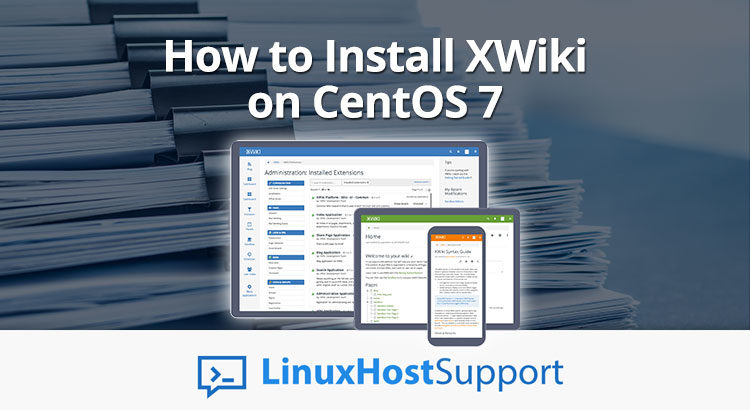
 In this tutorial, we are going to show you how to XWiki on CentOS 7. XWiki is a free and open-source advanced wiki software platform written in Java. It runs on servlet containers like JBoss, Tomcat, etc. which uses a database such as MySQL or PostgreSQL to store its information.
We will use a VPS with CentOS 7 but you should be able to install XWiki following this tutorial on all Red hat based Linux distributions. Installing XWiki on CentOS 7 is a fairly easy task and it shouldn’t take more than 20 minutes to finish it.
 Using SSL (short for Secure Socket Layer) is vital to keeping your site’s visitors safe as well as improving your webpage’s ranking on search engines. Without SSL, the data and information sent between your web server and your site’s visitors can be seen by third parties that are transmitting that data. With SSL, this data is encrypted, and only you and your visitors can see the information, keeping both sides safer.
 Some of TaskBoard’s main key features are the following:
 Cockpit is a free, open source and self-hosted content management system (CMS) application written in PHP. It is a simple content platform used by web developers to create and manage any structured content. Cockpit stores the data in an SQLite database, so you don’t need to install or configure a database server such as MySQL / MariaDB. All of this combined makes for a pleasant CMS experience that allows you to share your ideas and content with the world without needing almost any technical knowledge whatsoever.
 Apache Kafka is an open source messaging system and distributed streaming platform. It’s designed to be scalable, responsive, and provide an excellent experience when dealing with real-time data feeds. It’s great at providing real time analytics and processing of data – and thanks to its rich API support, developers can easily implement Apache Kafka and mold it to their exact needs.
 Jupyter Notebook is a popular and widely used open-source web-based software that allows users to create and share documents that contain live code, equations, visualizations, and narrative text.
 The official CentOS 7 repository has a huge list of packages and it covers almost all bases in terms of software for servers, but sometimes we need some additional packages which are not available in the official repositories. In that case, we can simply add new repositories to further expand the catalogue of packages available to us. Let’s begin with the tutorial.