How to Add a User to Sudo Group on Debian 9

In this article, we will show you how to add a user to the sudo group in Debian 9.

Every time you install a fresh new operating system, a user named root is being created automatically. This user is extremely powerful and even dangerous because it has a complete access to the server. Typically, the root user is only used for administrative tasks, as there are no restrictions present like they are for any other user.

Note that Linux does not have an “undo” command. In order to reduce the risk of irreversible damage to the system, we can create a user who will not have privileges to execute commands that can affect the server. However, having administrative access may still be appropriate for everyday tasks – sometimes we need the power to execute some command as an administrative user. This benefit can be utilized using the sudo command. However, to use the sudo command, the user is required to be present in the sudo group. Let’s get started with the tutorial. This should work in Debian 10 as well as other future versions of Debian, as these commands usually only have small variations over time.

(more…)

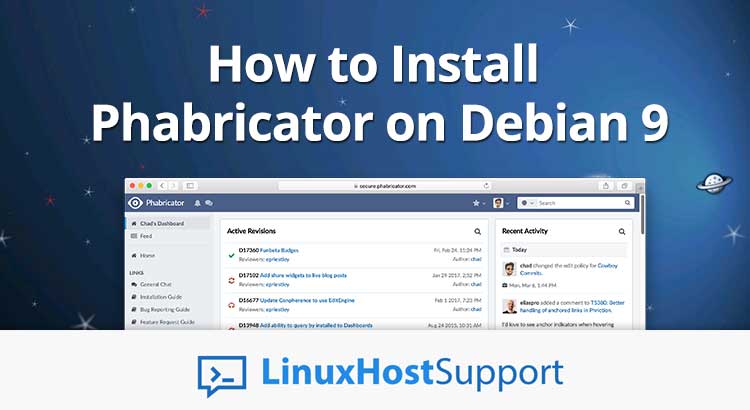
How to Install Phabricator on Debian 9

How to Install Phabricator on Debian 9

Phabricator is free and open source set of tools that ease the process of building software and allows developers and companies to build better software. It includes tools for differential code review, repository hosting and browsing, monitoring tool, bug tracker, wiki and much more. Phabricator originally was developed as an internal tool at Facebook, but now it is under active development by hundreds of unique developers. In this tutorial we will install Phabricator on a Debian 9 VPS with Apache, PHP and MySQL server.

(more…)

How To Set Up Apache with HTTP/2 Support on Debian 9

How To Set Up Apache with HTTP/2 Support on Debian 9

We will show you how to set up Apache with HTTP/2 support on Debian 9. HTTP/2 is a major revision of the HTTP network protocol. It is derived from the experimental SPDY protocol developed by Google. The primary goal of HTTP/2 is to reduce the latency, minimize the protocol overhead and add support for request prioritization. This makes the web applications to load much faster.High level syntax like status codes, methods, headers fields, URIs etc. are the same as the earlier version of HTTP except there is a difference on how the data is framed and transported between the client and the server.

(more…)

How to install Buildbot on Debian 9

How to install Buildbot on Debian 9

Buildbot is a continuous integration framework written in Python which automates the test, build and release software cycles. It is built using the Twisted networking engine, supports parallel execution of jobs across multiple platforms and runs on all major operating systems. The Buildbot installation can have one or more masters and multiple workers. In this tutorial, we will show you how to install Buildbot master and worker on Debian 9. (more…)

How to Install and Configure Observium on Debian 9

How to Install and Configure Observium on Debian 9

We’ll show you how to install Observium on a Debian 9 server. Observium is a network monitoring software written in PHP. It is a cross-platform application and supports all popular operating systems, but this tutorial was written for Debian 9 OS. At the time of writing this tutorial, the latest stable version of Observium is 17.9, and it requires:

(more…)

How to Install Cacti SNMP Monitoring Tool on Debian 9

How to Install Cacti SNMP Monitoring Tool on Debian 9

In today’s tutorial, we will show you how to install and Cacti on a Debian 9 server. Cacti is an open-source, web-based network graphing solution written in PHP and build on top of the industry-standard data logging tool RRDtool. Cacti stores all of the necessary information in a MySQL database and allows a user to poll services at predetermined intervals and graph the resulting data using RRDtool. This guide should work on other Linux VPS systems as well, but was tested and written for a Debian 9 VPS.

(more…)